State Exclusion
Abstract
Details of the task of quantum state exclusion.
The task of quantum state exclusion Caves et al. (2002) Pusey et al. (2012) Bandyopadhyay et al. (2014) arises from a natural relaxation of the task of quantum state discrimination – particularly in scenarios where deterministic quantum state discrimination is impossible. In this task, a weaker aim is considered, with the player instead being asked to determine states from the set they have not been given by the referee.
State Exclusion Overview
Task of Quantum State Exclusion
Let be an ensemble, such that one gets the state with probability . Assume this ensemble is known to both a referee and a player. The referee then takes a state from the ensemble, with probability , and gives it to the player. The players makes a measurement on the state and outputs a set of indices of length , where .
If the player succeeds at the task, if the player fails at the task. Card content
In the task of quantum state exclusion, the player therefore aims to identify -states that they have not been given to them by the referee.
1-State Exclusion
If the player outputs a single label such that with certainty, this is conclusive 1-state exclusion. This occurs if the player is able to find a POVM such that
If the player gets the measurement outcome associated to , they output knowing with certainty the referee could not have sent .
In general, a POVM may not exists that can perform conclusive state exclusion. Instead, state exclusion can be performed with some error, as given by the following SPD:
where is the probability of making an error when performing exclusion, meaning the probability of outputting the index .
k-State Exclusion
If the player outputs a set of labels, , such that with certainty, this is conclusive -state exclusion. There are different sets of labels the player could exclude, corresponding to all the different subsets of of length . Therefore, when performing -state exclusion the player aims to find a POVM with elements such that each measurement outcome allows the player to exclude a subset of states from of length .
k-State Exclusion as 1-State Exclusion
All -state exclusion tasks can be recast as 1-state exclusion tasks by reformulating the set Bandyopadhyay et al. (2014). Conceptually, this means all -state exclusion tasks have a 1-state exclusion task that they are dual to, allowing all state exclusion tasks to be studied under the 1-state exclusion framework.
Let be the set of all subsets of the integers of length . The player aims to measure a POVM on a state , given to them by the referee, and output a set of labels such that . Such a measurement will be a POVM with terms as there are subsets of of length . For each elements of this POVM, , the following equation must hold,
By defining
the -state exclusion task can be expressed as the following set of equations
This is now the same form as the 1-state exclusion task conditions. This is the dual 1-state exclusion task to the -state exclusion task.
Using the dual 1-state exclusion task, -state exclusion can also now be formulated as an SPD:
where if no POVM to conclusively perform -state exclusion exists.
-State Exclusion
For an ensemble with states, performing conclusive -state exclusion is equivalent to performing deterministic quantum state discrimination: knowing for certain states that you do not have is equivalent to knowing which state you do have. Put alternatively,
where is maximum success probability in performing quantum state discrimination.
As it is known that if and only if all states in the ensemble are orthogonal. Hence, if and only if all states in the ensemble are orthogonal.
Conclusive state discrimination can therefore be considered to be a special case of conclusive -state exclusion. How the two tasks are related in the non-conclusive case, and for , remains an active area of research.
Sub-Channel Exclusion
A closely related task to state exclusion is sub-channel exclusion. A special case of sub-channel exclusion concerns a collection of completely-positive trace non-increasing linear maps, , such that is a channel. This collection is a quantum instrument, with each map called a sub-channel.
In this task, a player has a reference state that they send to the referee. The referee then measures using the instrument and returns the post-measurement state to the player. The player measures a POVM on the state and outputs a label . They succeed if they output a label of a sub-channel that was not applied. As before, the player can output the label of a sub-channel not applied with certainty, they can output labels, , or they can output labels with certainty.
Weak and Strong Exclusion
Here we introduce the notion of weak and strong state exclusion, defined in Stratton et al. (2024).
Weak State Exclusion
Given a set of states , weak conclusive 1-state exclusion is possible if there exists a POVM such that
Strong State Exclusion
The additional condition in strong state exclusion ensures that all outcomes of the POVM have some probability of occurring. Strong conclusive 1-state exclusion on the set is defined to be the existence of an element POVM where each element excludes a different state from with certainty.
Weak conclusive 1-state exclusion on is defined to be the existence of a POVM with non-zero elements, where , such that each conclusively exclude a different state from a subset of of size . Seen Figure 1 for an example.
When extended to -state exclusion, strong exclusion means that there exists a POVM that can exclude all possible sub-sets of of length . Weak exclusion then means that there exists a POVM that can only exclude some subsets of of length . Note, this is equivalent to considering strong and weak exclusion on the equivalent 1-state exclusion task.
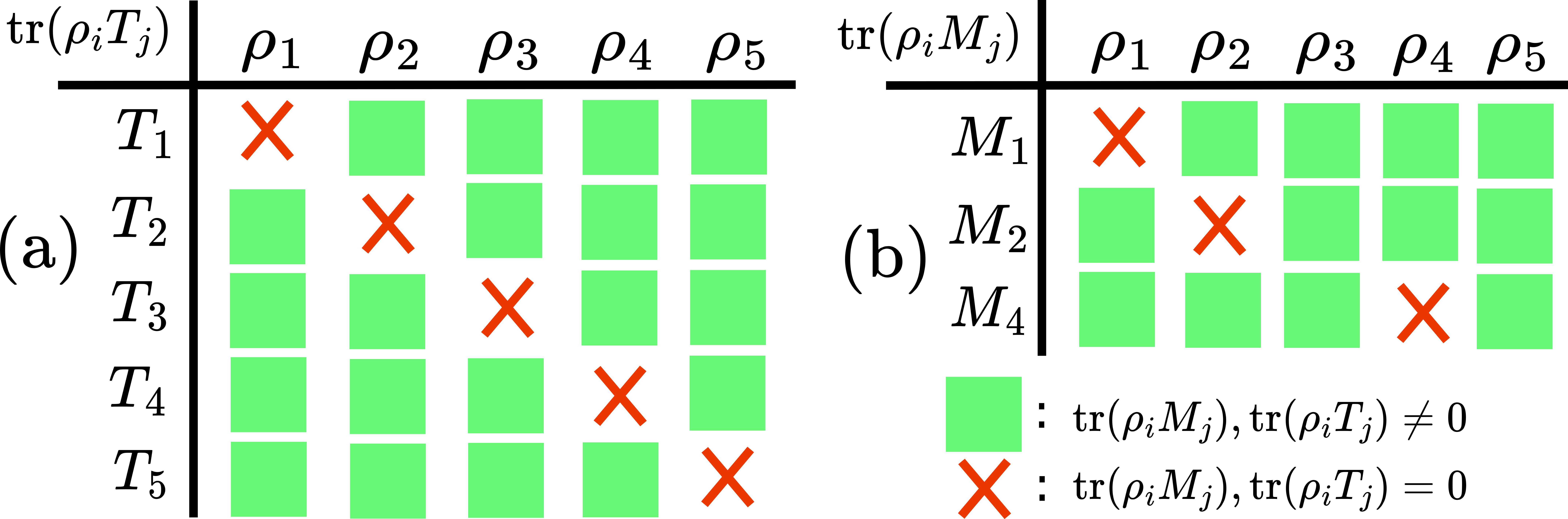
Figure 1:A figure showing the difference between strong state exclusion and weak state exclusion.
Further Details
It is clearly the case from the above definitions that weak state exclusion is a requisite for strong state exclusion – justifying their respective names. Moreover, if one is able to perform strong state exclusion, they can trivially convert this into weak state exclusion via classical post-processing of the measurement outcomes. It can also be seen that if any of the states in are full-rank, then strong state exclusion is never possible. This is due to if and only if when is full-rank.
The above definition of strong conclusive 1-state exclusion on states means it is defined as the existence of an element POVM where each element excludes a different state from with certainty. It can be the case that some POVM elements exclude multiple states, but each element must exclude at least one different state. The above definition of weak conclusive 1-state exclusion given above is then defined to be the existence of a POVM with non-zero elements (where ) that each conclusively exclude a different state from a subset of of size . Using this terminology, one could define the ability to perform weak state exclusion on as the ability to perform strong state exclusion on some subset of .
Previously, weak state exclusion has been used as the general definition of state exclusion. However, this definition has attracted (indirect) criticism for trivialising the problem of state exclusion, as if a player can perform conclusive 1-state exclusion on any two states using the two-element POVM , then by definition 1-state exclusion could trivially be performed on the whole set by considering the element POVM
Each measurement outcome would exclude one state, but some states would never be excluded. Whilst such an example is indeed trivial, there exist plenty of intermediate scenarios between this and strong state exclusion that could prove useful in operationally motivated tasks.
- Caves, C. M., Fuchs, C. A., & Schack, R. (2002). Conditions for compatibility of quantum-state assignments. Physical Review A, 66(6). 10.1103/physreva.66.062111
- Pusey, M. F., Barrett, J., & Rudolph, T. (2012). On the reality of the quantum state. Nature Physics, 8(6), 475–478. 10.1038/nphys2309
- Bandyopadhyay, S., Jain, R., Oppenheim, J., & Perry, C. (2014). Conclusive exclusion of quantum states. Physical Review A, 89(2). 10.1103/physreva.89.022336
- Stratton, B., Hsieh, C.-Y., & Skrzypczyk, P. (2024). Operational Interpretation of the Choi Rank Through k-State Exclusion. arXiv. 10.48550/ARXIV.2406.08360